



Artificial intelligence is moving quickly from experimentation to execution across the enterprise. From predictive supply chains to automated finance, organizations use AI to improve decisions, reduce effort, and accelerate operations across SAP environments.
Yet many of these initiatives hit the same roadblock: the technology works, but the data does not. In many SAP environments, the real barrier to enterprise AI is not the model, it is the absence of trusted, governed master data.
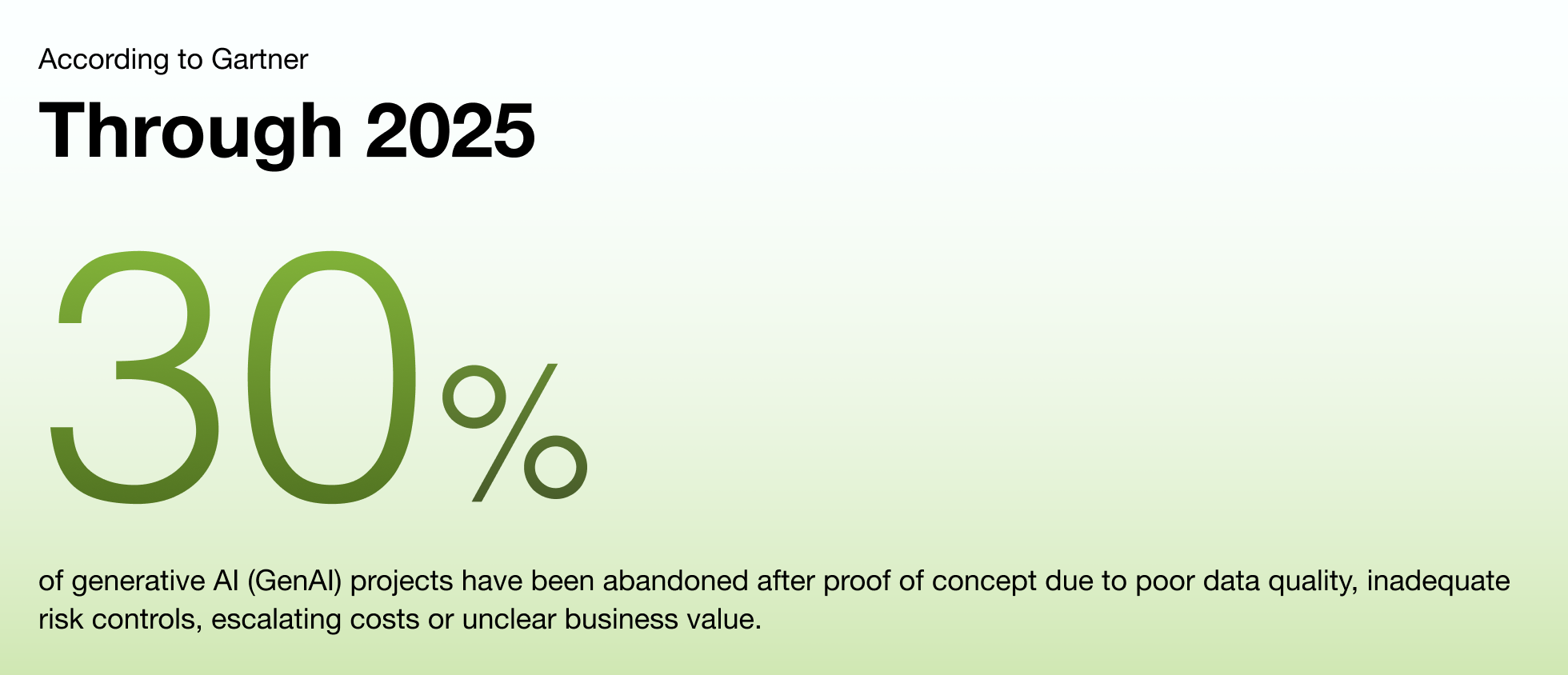
Enterprise AI initiatives succeed when organizations build a trusted data foundation. In SAP environments, this means establishing strong SAP data governance, maintaining high-quality master data, and ensuring AI-ready data architecture across systems such as SAP ECC, SAP S/4HANA, and SAP BTP. Without well-governed master data, AI models amplify inconsistencies rather than generating reliable insights.
AI strategy has long focused on picking the right models, platforms, and tools. However, we are seeing a shift among leading enterprises toward a more practical reality. They understand that AI success depends more on data readiness than on algorithms. This matters even more in SAP-driven enterprises, where business-critical decisions rely on structured master data.
SAP systems sit at the center of enterprise operations. They support procurement, finance, manufacturing, logistics, and customer processes. Each function relies on trusted master data.
Fragmented master data quickly impacts reporting, automation, and team productivity as more time is spent correcting data than using it. Then AI enters the picture. AI models do not distinguish between trusted and untrusted data. They work with the inputs they receive. If those inputs are incomplete, inconsistent, or duplicated, the outputs reflect the same flaws.
This is why data governance across the SAP landscape is no longer optional. It is the foundation for enterprise AI that can scale with confidence.
AI-ready data does not come from a one-time cleanup project. It comes from an operating model that combines governance, architecture, and continuous quality control. Organizations that succeed with AI align their data across three areas.
Alignment
Data must reflect the correct business meaning for the use case. That includes definitions, relationships, hierarchies, and metadata.
Quality
Data must be continuously validated and remain complete, accurate, and consistent as processes change.
Governance
These capabilities create a reliable data foundation for analytics, automation, and AI.
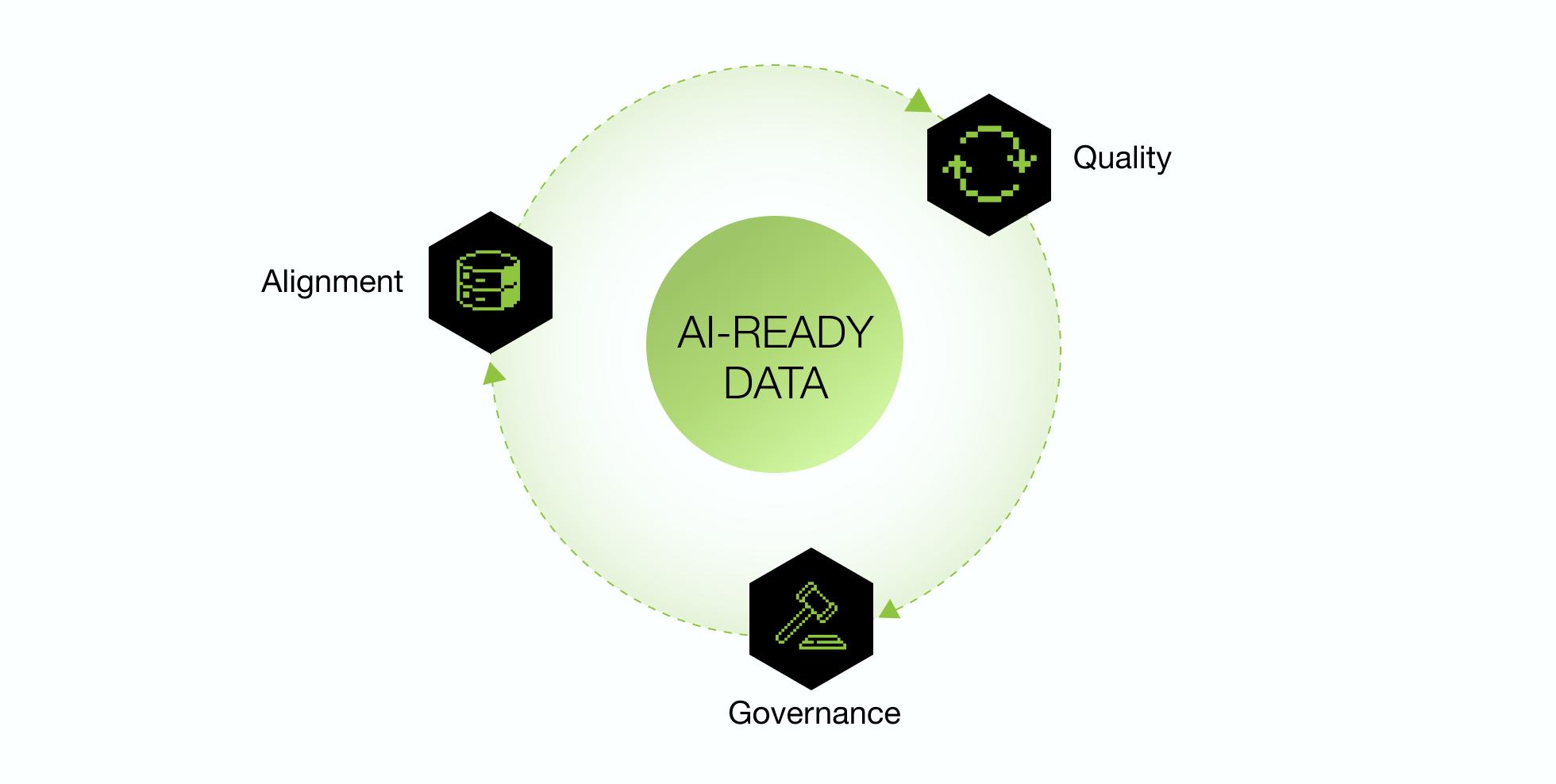
These combined capabilities form a trustworthy data foundation, an essential prerequisite for effective analytics, automation, and AI. As Gartner frames it, leaders should ask three practical questions as they prioritize AI-ready data initiatives:

One thing to keep in mind is that answering these questions requires more than policy. It requires the right stakeholders working together from the start.
Ensuring data is ready for AI requires a cross-functional operating model led by the business and supported by IT, security, architecture, finance, and data teams. The most successful enterprises build a coordinated leadership model that aligns priorities, funding, governance, risk, and execution.
That is where many organizations fall behind. They may invest in AI tools, data platforms, and transformation programs, yet still lack the cross-functional structure needed to make AI-ready data a reality within the business. As a result, ownership becomes fragmented, decision rights remain unclear, and execution slows down.
For enterprise leaders, this is the critical shift. AI-ready data must be sponsored at the top, governed across functions, and operationalized by the teams closest to the data. In practice, that means several groups must work in sync.
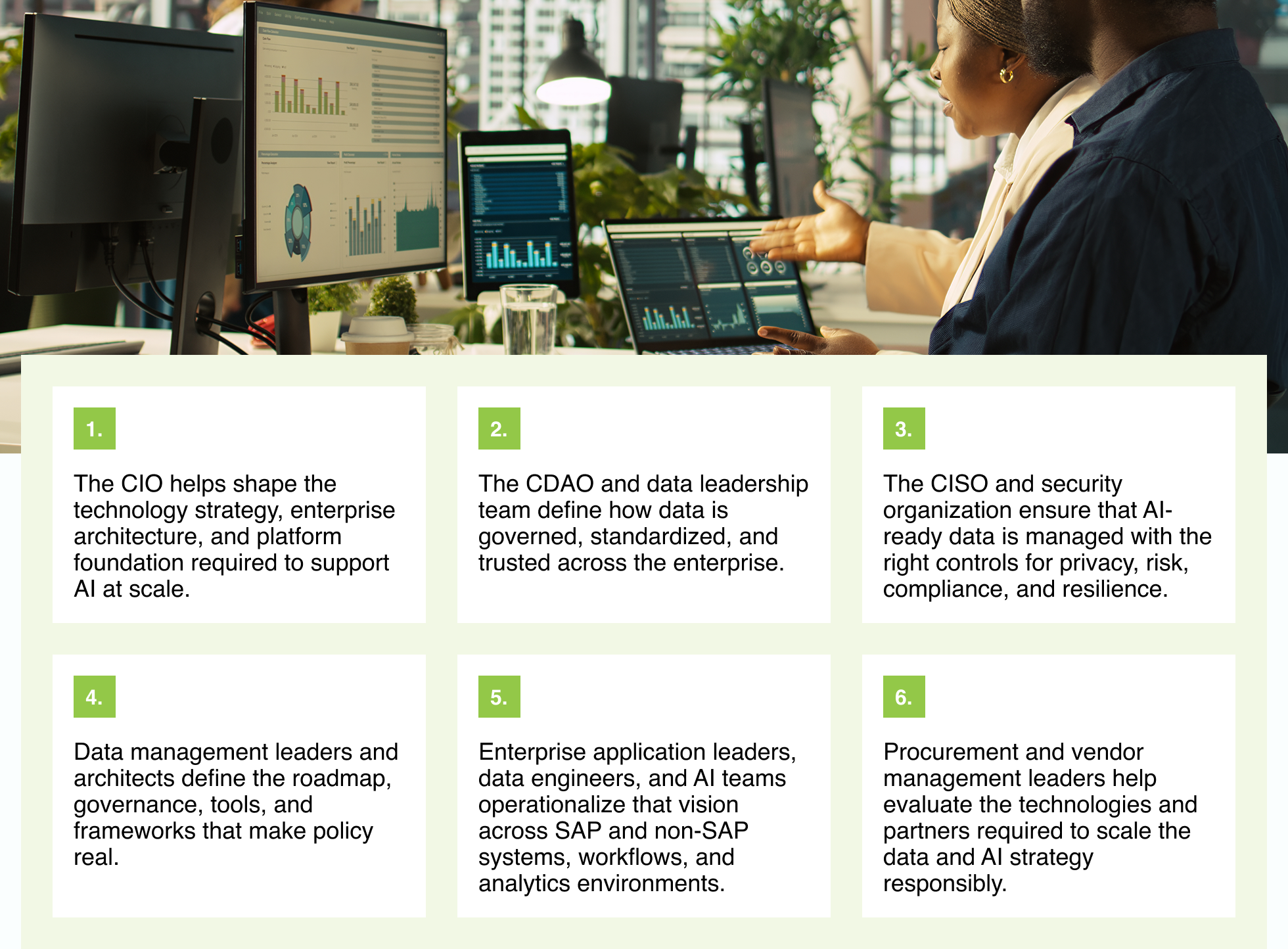
When these teams collaborate, organizations move quickly and confidently. This alignment reduces friction, boosts accountability, and establishes a reliable basis for AI-driven decisions. When teams don't align, even ambitious AI projects remain stuck in pilots.
Enterprise AI leaders must go beyond algorithms and pipelines. The lasting advantage lies in a governance model that unites leadership, data ownership, architecture, security, and business execution to deliver trusted, AI-ready data.
Most large enterprises do not operate in one clean SAP environment. They manage a mix of SAP ECC, SAP S/4HANA, SAP BTP services, cloud applications, and non-SAP platforms. Data moves across these systems through integrations, workflows, and external applications.
That complexity creates risk. Without a centralized governance approach, each system can apply different rules, structures, and definitions to the same master data object. That makes it difficult to establish a single version of the truth. And without a single version of the truth, AI remains trapped in isolated pilots.
To scale AI across the enterprise, organizations need a governance model that connects processes, systems, and people around trusted master data. This is why AI readiness in SAP requires more than technology. Success depends on a governance model that aligns leadership, systems, and business ownership to drive results at scale. The key takeaway: strong, unified governance is essential for effective AI readiness.
Forward-looking enterprises recognize that data governance is now a strategic capability. It enhances agility, cuts operational friction, and powers data-driven decisions. That shift changes how governance is applied.
McKinsey makes the same point. Effective MDM depends on clear roles, governance councils, strong business ownership, and an operating model that aligns business and IT around trusted master data.
This is where modern master data governance platforms become critical to operationalizing AI-ready data across complex SAP landscapes.
SimpleMDG gives SAP-driven enterprises a governed path to AI adoption. Built entirely on SAP BTP, the platform is designed to align natively with SAP’s evolving AI ecosystem and provide organizations with a faster, simpler way to govern master data at scale.
Business teams can work through a self-service, no-code governance model rather than wait for long, IT-heavy change cycles. That helps enterprises accelerate time-to-value, reduce reliance on technical teams, and deploy governance more quickly across critical domains.
SimpleMDG also delivers value with 100+ out-of-the-box master data types on SAP BTP, along with current AI capabilities, including data attribute recommendations, AI mass processing, anomaly identification, photo recognition, and OCR. Its roadmap extends to AI integration with client-specific documentation via RAG, a more comprehensive AI-native user experience, and agentic AI integration for more autonomous master data workflows.
That is a considerable difference for SAP-led enterprises. AI is not treated as a generic add-on. It is applied within a governed, SAP-native architecture designed for trusted master data, scalable automation, and future-ready innovation. The broader AI approach also aligns with SAP’s ecosystem, including Joule, the SAP Generative AI Hub, SAP HANA Cloud, and interoperable agent-based workflows across SAP and non-SAP systems.
The result is not just cleaner data. It is faster execution, stronger compliance, lower operational friction, and greater confidence in enterprise AI.
For many enterprises, AI is rising alongside broader SAP transformation. That includes S/4HANA migration, process harmonization, cloud adoption, and modernization of legacy data models.
These programs not only increase the cost of poor governance, but also raise the cost of good governance. They also increase the value of getting governance right. When organizations establish trusted, governed master data early, they reduce migration risk, improve cross-functional alignment, and create a future-ready architecture for AI and automation.
When they do not, transformation slows down. Teams stay dependent on manual fixes. Business users remain tied to IT for every rule change, workflow update, or governance adjustment.
A business-led, self-service governance model changes that dynamic. It empowers teams to take control of data quality while maintaining enterprise standards.
AI will continue to reshape enterprise operations. But the organizations that capture lasting value will not be the ones chasing the most advanced model. They will be the ones building the most trusted data foundation.
In SAP environments, this requires investing in governance, accountability, and architecture ahead of scaling AI use cases. It means treating master data as a strategic asset. And it means enabling business users with tools that simplify governance, not make it harder.
The future of enterprise AI will not be a technology decision. It will have to be an operating model decision. Organizations that treat data governance and master data management as strategic capabilities will unlock AI at scale. Those who do not will continue experimenting without realizing the full value of enterprise AI.