




Why AI Has Become Central to SAP Governance
Artificial intelligence has moved from concept to daily practice for SAP-driven enterprises. Organisations pursuing S/4HANA transformation, global standardisation, supply chain resilience, procurement efficiency, and financial accuracy recognise a simple truth: AI only delivers value when the data behind it is accurate, consistent, and trusted.
At the same time, there is growing discussion in the SAP community around the idea that AI “loves dirty data.” The nuance is important. Downstream AI systems - analytics, automation, forecasting, and decision engines can't cope with poor-quality master data. When master data degrades, AI outcomes degrade with it.
However, AI embedded within governance and data quality management behaves very differently. When applied upstream - inside master data governance workflows - AI thrives on imperfect data. It uses patterns, context, and history to identify inconsistencies, interpret unstructured inputs, and guide users and stewards toward correction.
That is the sense in which AI “loves dirty data”: not as fuel for business decisions, but as a signal for governance action. This is why the SimpleMDG + SAP whitepaper underscores a core principle: AI does not replace governance. It accelerates governance.
Why SAP Customers Need AI-Enabled Governance
SAP customers operate across complex, hybrid landscapes. Over time, decentralized decision-making, multiple operating units, and legacy processes lead to costly data quality issues. AI becomes essential not because governance is broken, but because governance must scale to keep pace with business velocity.
The need for AI-driven governance in SAP stems from several fundamental challenges:
- Increasing landscape complexity: Organizations run ECC, S/4HANA, Ariba, SuccessFactors, CRM, and industry apps in parallel. Each system introduces a unique data model, sync pattern, and operational nuance, making consistent governance difficult without intelligent assistance.
- Data drift across global operations: Regional teams, local business units, and distributed operational centres often maintain their own variations of vendor, customer, or material data. Over time, these variations accumulate, leading to misalignments that AI can help surface, interpret, and bring to the attention of governance owners.
- High volume and velocity of change: Modern supply chains, dynamic vendor ecosystems, global customer reach, and rapid product launches require master data updates to keep pace. Traditional governance processes struggle to scale without automated intelligence supporting decision-making.
- Ambiguous or incomplete contextual understanding: Rules-based governance alone cannot interpret nuanced attributes, legacy patterns, or cross-functional dependencies. AI introduces contextual awareness, helping stewards identify issues earlier and understand them more deeply.
- Knowledge gaps and reliance on tribal expertise: As experienced SAP users transition out of organisations, critical knowledge disappears with them. AI mitigates this by embedding guidance directly into workflows, ensuring consistent governance regardless of personnel turnover.
- Impact: Without AI, organizations face longer cycle times, rising exceptions, compliance risk, process delays, and heavy manual effort. AI-driven governance reverses these trends by creating a guided, scalable model that accelerates time-to-value.
How SAP BTP Powers Enterprise-Grade AI for Master Data
AI interacting with SAP data must meet strict requirements for trust, security, authorization, and semantics. SAP BTP provides the foundation to run AI safely and predictably while understanding SAP domain logic.
SAP BTP strengthens AI-driven governance through several foundational capabilities:
- Native alignment with SAP security and authorization: AI services on BTP inherit identity and access controls, ensuring sensitive data is never exposed, misused, and remains within defined governance boundaries.
- Vector search and contextual retrieval: SAP HANA Cloud’s vector engine enables Retrieval-Augmented Generation (RAG). AI references policies, configuration documents, historical decisions, and templates to reduce hallucinations and improve precision.
- Unified integration with SAP applications: Built alongside S/4HANA, ECC, Ariba, and more, BTP lets AI reason over vendors, customers, materials, plants, and org structures without fragile custom bindings.
- Clean-core compliance: Intelligence lives on BTP, outside the core transactional system, while preserving S/4HANA stability and upgradeability.
- Scalability and enterprise resilience: SAP BTP enables organisations to scale AI usage across hundreds of data domains, thousands of users, and millions of attributes while maintaining performance and compliance.
- Impact: SAP BTP turns AI into a governed, explainable capability that supports safe, traceable master data decisions across the business.
How AI Strengthens Master Data Governance
AI adds intelligence where rules alone fall short. It brings context, recognizes patterns, and supports decisions with enterprise-specific history and semantics.

AI contributes to stronger governance in the following ways:
- Pattern recognition at scale: AI analyses large volumes of master data to identify similarities, variations, or anomalies that rule-based engines miss. This empowers stewards to address issues proactively rather than reactively.
- Context-aware attribute suggestions: Instead of relying solely on fixed validation rules, AI recommends values based on observed patterns across similar materials, vendors, or customers, helping users create records aligned with enterprise standards.
- Intelligent comparison of historical data: AI learns from past decisions, previous corrections, and governance actions, making future recommendations better aligned with organisational expectations.
- Proactive anomaly detection: AI highlights subtle inconsistencies or irregularities during data creation, helping prevent downstream process failures before they occur.
- Dynamic guidance for business users: AI interprets policies, rulebooks, or documentation and provides real-time explanations, ensuring governance adoption even among users unfamiliar with SAP’s complexity.
- Impact: AI shifts governance from a reactive, manual discipline to a proactive, guided model in which stewards make better decisions faster and business users interact with governance more confidently.
Importantly, this intelligence operates within governance boundaries. AI does not autonomously change master data or bypass approval logic. Instead, it strengthens rule-based Data Quality Management by highlighting risks, guiding users, and supporting steward-led decisions - ensuring that downstream SAP systems receive governed, trustworthy data.
Retrieval-Augmented Generation (RAG): Contextual Intelligence for SAP
RAG is one of the most important breakthroughs in enterprise AI because it ensures that every AI-generated insight is grounded in approved, factual information. This is crucial for SAP customers, where incorrect guidance can impact procurement accuracy, financial integrity, or regulatory compliance.
RAG improves governance through several capabilities:
- Policy-aware intelligence: AI retrieves internal governance policies, procedural guidelines, and documentation to ensure answers reflect real enterprise rules rather than generic model behaviour.
- Multi-document context synthesis: Users who previously spent hours searching through configuration guides, templates, or global standards can now receive consolidated insights grounded in all relevant documents at once.
- Explainability and trust: Every AI response generated via RAG is traceable to its sources, ensuring stewards and auditors can understand why a recommendation was made and verify its correctness.
- Smarter navigation of SAP complexity: Users can ask natural-language questions such as “What fields are required for extending a material to Plant 2000?” and AI will return answers anchored in SAP-specific governance and configuration.
- Impact: RAG transforms internal documentation and tribal knowledge into an accessible, intelligent support system that reduces onboarding effort, improves consistency in governance, and strengthens compliance.
Visual Intelligence: Understanding Unstructured Business Content
Much of the information required for accurate master data creation exists outside structured systems. It sits within technical drawings, vendor certifications, engineering documents, schematics, PDF datasheets, and even images captured on the shop floor.
Real-World Use Case: Spare Part Identification in the Field
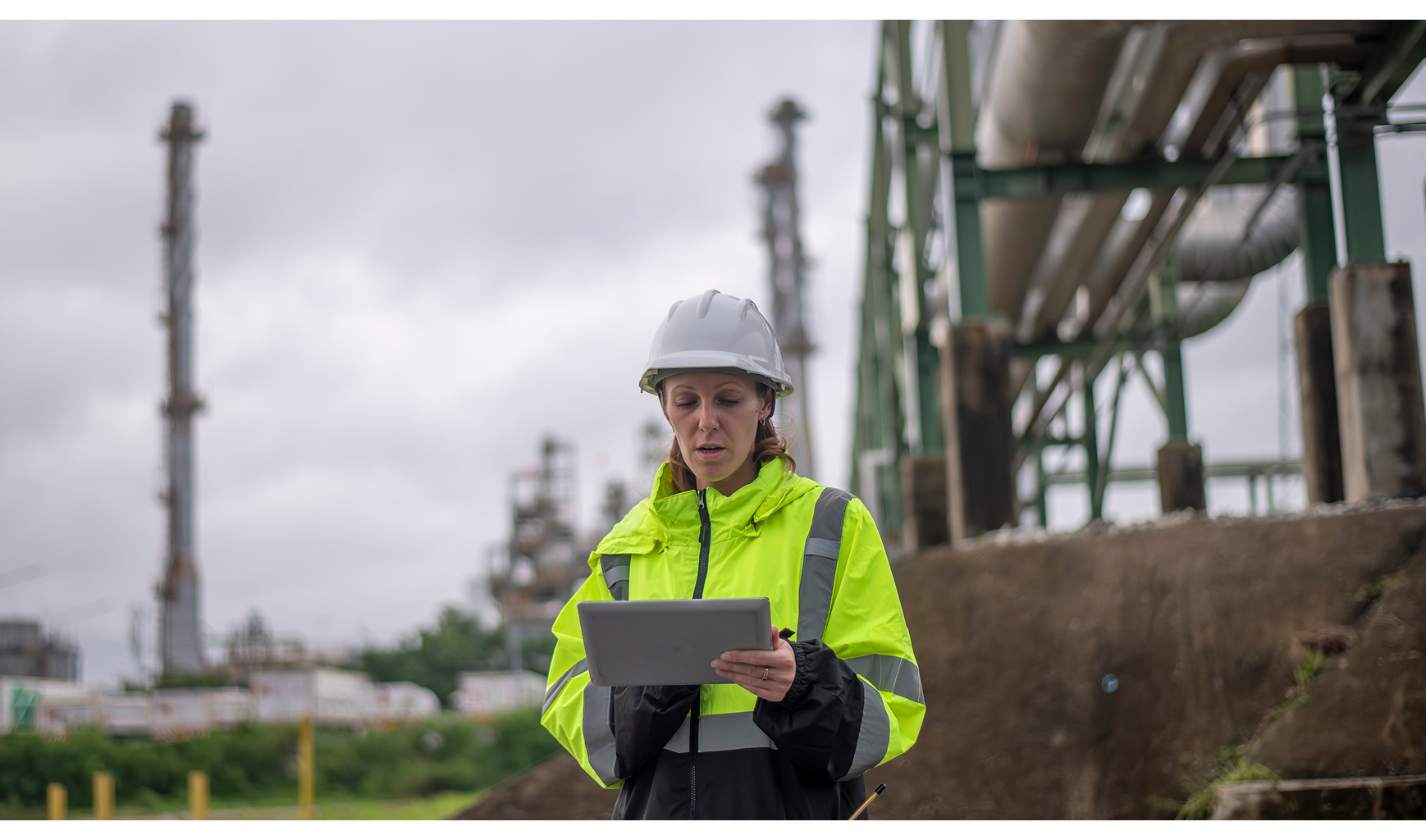
Consider a common scenario in asset-intensive industries. An engineer is on-site repairing equipment and urgently needs a replacement spare part. The part is physically available, but the engineer does not know the SAP material number or exact specifications required to raise a purchase order.
Traditionally, this leads to delays, incorrect orders, or the creation of duplicate materials - introducing further data quality issues.
With AI-enabled visual intelligence inside SimpleMDG, the process changes:
- The engineer takes a photograph of the part nameplate or label using a mobile device
- The image is uploaded into SimpleMDG
- AI interprets key attributes such as manufacturer, model number, serial number, and technical specifications
- The system identifies likely existing materials or proposes governed attributes
- The request flows through standard approval workflows
- A purchase order is created using validated, governed master data
In this scenario, AI does not bypass governance. It accelerates it, translating real-world visual information into structured SAP master data while preserving control, auditability, and clean-core principles.
Visual intelligence enables organisations to interpret and use this unstructured content effectively:
- Document interpretation and attribute extraction: AI can scan product datasheets, packaging labels, and vendor forms to identify key information that helps stewards complete master data records correctly.
- Recognition of physical components: Images or engineering diagrams can be analysed to suggest likely material classifications or related data attributes, enabling faster onboarding of physical assets or spare parts.
- Reduced cognitive load for business users: Visual AI accelerates processes that previously required specialised knowledge or manual interpretation, helping teams complete data creation tasks with more confidence.
- Context-enhanced governance: Visual insights complement SAP metadata, creating a richer understanding of the record being created or updated.
- Impact: Visual intelligence elevates governance by bridging the gap between structured SAP fields and real-world documents, enabling more intelligent, more accurate data-driven decisions.
Human–Machine Collaboration in AI-Driven Governance
AI is most valuable when it augments human judgment. Governance still requires oversight, context, and accountability. AI does this by reducing repetitive tasks, helping interpret complex rules, and surfacing insights that improve decision-making.
The collaboration works in several ways:
- AI supports the routine; humans handle exceptions: AI guides users through predictable, pattern-based aspects of data creation, while stewards handle nuanced or risk-sensitive decisions.
- Knowledge retention despite workforce changes: AI captures organisational expertise through learned patterns and RAG-based retrieval, so governance remains consistent even when experienced personnel transition.
- Enhanced governance design: Insights from AI help identify where rules should evolve, where exceptions commonly occur, and where process gaps persist.
- Impact: Human–machine collaboration creates a governance model that is faster, more resilient, and more scalable across regions, business units, and evolving SAP programs.
Real-World Use Cases of AI in SAP Master Data Governance
AI demonstrates value when it improves practical, everyday workflows across SAP domains. These examples reflect scenarios already benefiting organisations today:
- Vendor data creation and adaptation: AI provides similarity detection, contextual suggestions, and policy-aware guidance to ensure vendors are onboarded accurately and consistently across geographies.
- Material master enrichment: From suggesting attributes based on historical patterns to interpreting unstructured documents, AI supports material creation and maintenance at scale.
- Customer master extensions: AI helps navigate dependencies across sales areas, attribute requirements, and relevant documentation to reduce delays and improve data completeness.
- Asset and spare-part identification: Visual intelligence interprets images such as nameplates, labels, and schematics to support governed material identification and purchasing in maintenance and engineering scenarios.
- Impact: These use cases reduce effort, improve accuracy, accelerate turnaround times, and build trust in master data across the enterprise.
Download the SAP + SimpleMDG AI Whitepaper
Explore the full architectural principles, RAG design patterns, SAP BTP alignment, and roadmap for the AI-enabled governance whitepaper by SimpleMDG, co-authored with SAP.
It offers:
- Detailed AI architecture
- Enterprise governance patterns
- RAG and vector search guidance
- Visual intelligence insights
- Practical adoption roadmap

What Sets SimpleMDG’s AI Approach Apart
SimpleMDG’s AI is built natively on SAP BTP and is aligned directly with SAP’s AI Trust Framework. This ensures that intelligence remains safe, contextual, reliable, and fully embedded into SAP’s governance boundaries.
What differentiates SimpleMDG:
- SAP-native architecture: AI operates within the SAP ecosystem, inheriting SAP authorisation, user roles, auditability, and operational safeguards, unlike external AI systems that require data to be exported.
- Contextual intelligence with RAG: Interpret internal rulebooks, policies, configuration guides, and prior decisions for organization-specific guidance.
- Breadth of coverage: SimpleMDG offers one of the most extensive coverages for SAP with 100+ master data types and accelerators supporting procurement, supply chain, finance, HR, sales, and operations
- Clean-core alignment: All intelligence runs on BTP, keeping custom code out of S/4HANA and protecting upgrade paths.
- Business-led, no-code governance: Empower business teams with an intuitive, self-service interface to accelerate time-to-value and reduce IT dependency.
- Rapid deployment: Implement in 8–12 weeks per master type to realize value fast and de-risk programs such as S/4HANA migration.
Conclusion: The Future of Master Data Governance Is Intelligent
AI is reshaping all facets of enterprise operations. However, in SAP environments, its real power emerges when paired with strong governance. SAP customers need governance that is faster, contextual, and aligned with how business teams work.
Downstream AI depends on clean, accurate data, but AI embedded inside governance is what makes that data possible at enterprise scale.
SimpleMDG combines SAP BTP-native AI with modern, no-code governance to deliver an intelligent, explainable, and scalable experience. Master data governance is evolving from reactive control to a proactive, intelligence-led capability that accelerates transformation. For SAP enterprises ready to modernize their data foundation, the path to trusted, business-ready data starts with AI, and the platform that enables it is SimpleMDG.
Table of Contents
- Introduction: Why AI Has Become Central to SAP Governance
- Why SAP Customers Need AI-Enabled Governance
- How SAP BTP Powers Enterprise-Grade AI for Master Data
- How AI Strengthens Master Data Governance
- Retrieval-Augmented Generation (RAG): Contextual Intelligence for SAP
- Visual Intelligence: Understanding Unstructured Business Content
- Human–Machine Collaboration in AI-Driven Governance
- Real-World Use Cases of AI in SAP Master Data Governance
- Download the SAP + SimpleMDG AI Whitepaper
- What Sets SimpleMDG’s AI Approach Apart
- Conclusion: The Future of Master Data Governance Is Intelligent


